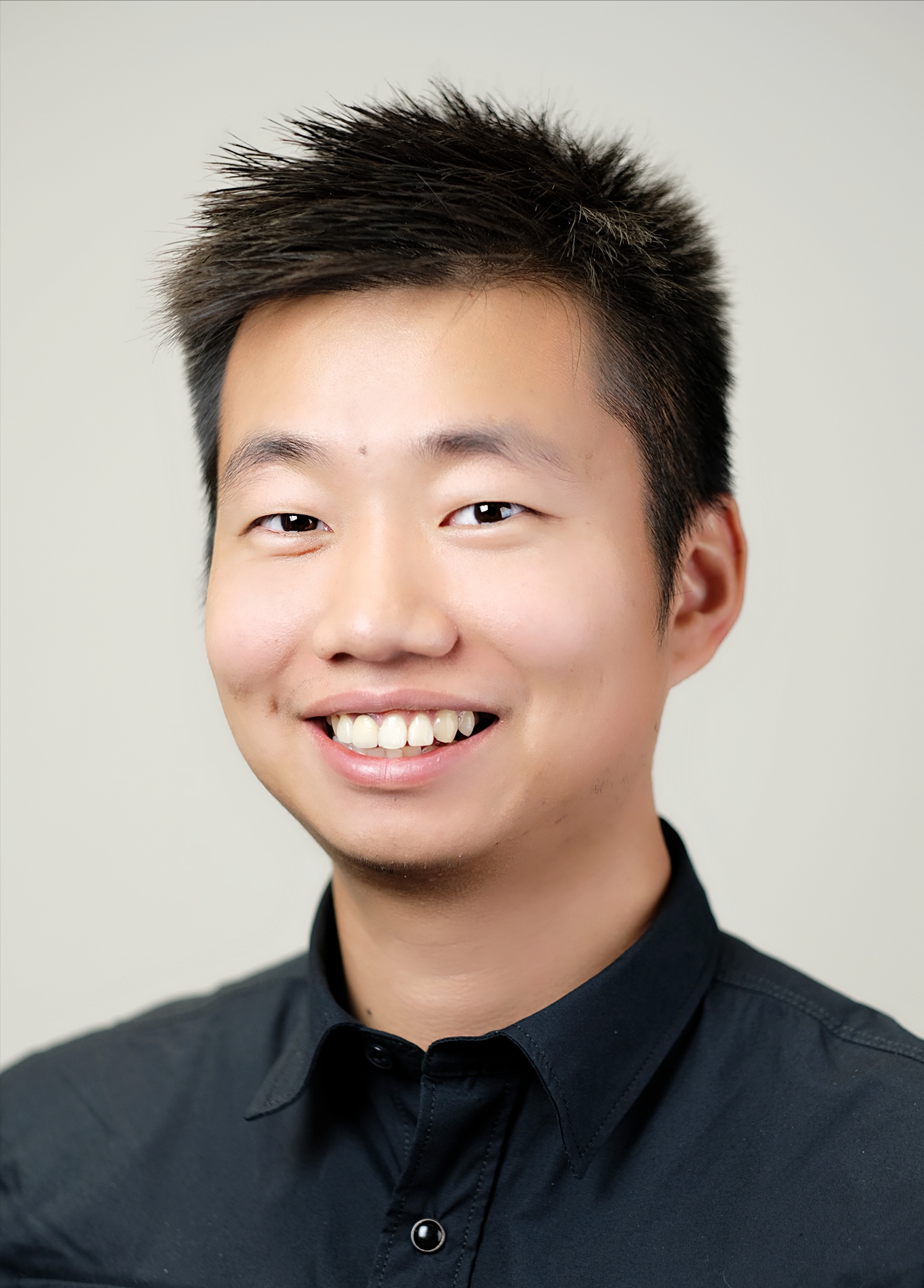
Ye Wang is an Associate Professor in the School of Artificial Intelligence at Chongqing University of Posts and Telecommunications (CQUPT). He received his Ph.D. in Computer Engineering from Texas A&M University and previously worked as a Research Scientist at Samsung Research America.
His research focuses on human-centered cognitive AI, with an emphasis on understanding human states, aligning with human preferences, and reasoning under uncertainty. His long-term goal is to develop AI systems that can make appropriate decisions for each individual across different real-world situations. He has served as principal investigator for projects supported by the National Natural Science Foundation of China and provincial research programs. He has published in leading journals and conferences, including IEEE TIP, TAFFC, TKDE, TASLP, TCSVT, ICML, and ICLR. His work has received ICML 2026 Spotlight (Top 2.2%), the Best Student Paper Award at NCAA 2026, the Best Conference Paper Award at Brain Informatics 2024, and a Best Paper Candidate recognition at IEEE ISPCE-ASIA 2023.
He is deeply committed to student mentorship. His students have received national innovation awards and major prizes in the Challenge Cup, RoboCom, and the MCM/ICM. His graduates have joined leading technology companies such as Tencent, ByteDance, and Xiaohongshu, or continued their studies at universities including the University of Michigan and Zhejiang University.
Google Scholar · DBLP · ORCID · Chinese Homepage · Curriculum Vitae (September 2026)
Employment
- Associate Professor, School of Artificial Intelligence, Chongqing University of Posts and Telecommunications, 2026–present.
- Assistant Professor, School of Computer Science and Technology, Chongqing University of Posts and Telecommunications, 2020–2025.
- Project Manager (on secondment), China Scholarship Council, 2020–2021.
- Research Scientist, Samsung Research America, 2019.
Education
- Ph.D. in Computer Engineering, Texas A&M University, 2014–2019.
- M.S. in Electrical Engineering, The University of Texas at Dallas, 2012–2014.
- B.Eng. in Microelectronics, Chongqing University of Posts and Telecommunications, 2007–2011.
News
- 2026.08: When Evidence Conflicts was accepted to Findings of EMNLP 2026. [paper][code]
- 2026.08: EnDist was accepted by IEEE Transactions on Knowledge and Data Engineering (TKDE). [paper] [code]
- 2026.07: NLG-Gen received the Best Student Paper Award at NCAA 2026. [conference][code]
- 2026.05: AGREE was selected as an ICML 2026 Spotlight paper (Top 2.2%). [paper] [code]
- 2026.04: HCFace was accepted by IEEE Transactions on Image Processing (TIP). [paper] [code]
- 2026.03: UME was accepted by IEEE Transactions on Audio, Speech, and Language Processing (TASLP). [paper] [code]
- 2026.01: LouisKV was accepted at ICLR 2026. [paper]
Earlier news
- 2025.09: VEaCap was accepted by IEEE Transactions on Circuits and Systems for Video Technology (TCSVT). [paper] [code]
- 2025.09: GCFA was accepted by Information Fusion. [paper] [code]
- 2025.09: CRMED was accepted by IEEE Transactions on Consumer Electronics. [paper] [code]
- 2025.08: Our clinical named entity recognition paper was accepted by IEEE Journal of Biomedical and Health Informatics (J-BHI). [paper] [code]
- 2025.02: HCBS was accepted by Information Processing & Management. [paper] [code]
- 2024.12: Our paper received the Best Conference Paper Award at the 17th International Conference on Brain Informatics. [paper]
- 2024.09: DEDNet was accepted by IEEE Transactions on Affective Computing (TAFFC). [paper] [code]
- 2024.08: Our Chinese named entity recognition paper was accepted by Artificial Intelligence Review. [paper] [code]
- 2024.08: SMOT was accepted by Neural Computing and Applications. [paper]
- 2024.01: KDDGAN was accepted by IEEE Transactions on Consumer Electronics. [paper]
- 2023.11: Our paper was selected as a Best Paper Candidate at IEEE ISPCE-ASIA 2023. [conference]
- 2023.05: Interviewed by People’s Education (《人民教育》). [link]
- 2023.03: Interviewed by Chongqing Daily about ChatGPT. [article] [video]
Overview
My research focuses on human-centered cognitive AI, with an emphasis on understanding human states, aligning with human preferences, and reasoning under uncertainty. My long-term goal is to develop AI systems that can make appropriate decisions for each individual across different real-world situations. I pursue this goal through three connected directions:
-
Human Understanding — understanding human states, attributes, individual dynamics, and collective behavior from multimodal and behavioral data. DEDNet models within-speaker and between-speaker dependencies for multimodal emotion understanding (J4); HCFace models age-related changes while preserving individual identity (J12); and HCBS reasons about actors, actions, and temporal context through hierarchical multimodal interactions in football (J5).
-
Human–AI Alignment — aligning AI systems with diverse human preferences and judgments rather than treating human feedback as a single uniform target. AGREE identifies systematic conflicts among aesthetic attributes and coordinates competing objectives in preference learning (C7).
-
Reasoning under Uncertainty — enabling AI systems to reason when evidence is incomplete, uncertain, long-tailed, or unreliable. UME combines expert specialization with uncertainty-aware fusion for challenging tail cases (J10); VEaCap uses visual evidence to correct hallucinated objects and recover omitted content in video captioning (J9); and NLG-Gen translates natural-language safety requirements into rare and high-risk driving scenarios for targeted evaluation (C6).
Ongoing Research
My current research examines three sources of complexity in real-world AI: individual variation, incomplete evidence, and interactions among multiple agents.
- Individual Differences. Modeling how AI can preserve meaningful variation across individuals rather than collapsing them into population-level patterns, enabling context-sensitive preference modeling and personalized trajectories.
- Reasoning Beyond Visible Evidence. Reasoning about hidden states, events, or risks that cannot be directly observed, using indirect and incomplete evidence to support reliable decisions.
- Multi-Agent Dynamics. Identifying latent interaction patterns among multiple agents that explain system-level outcomes, including how local interactions and coordination shape collective behavior.
Honors and Awards
- 2026 — Spotlight Paper, International Conference on Machine Learning (ICML), Top 2.2% (C7).
- 2026 — ICML 2026 Gold Reviewer. [link]
- 2026 — Best Student Paper Award, International Conference on Neural Computing for Advanced Applications (NCAA) (C6).
- 2024 — Best Conference Paper, International Conference on Brain Informatics (C4).
- 2023 — Best Paper Candidate, IEEE International Symposium on Product Compliance Engineering - Asia (ISPCE-ASIA) (C3).
Research Funding
Principal Investigator
- 2024–2026: NSFC Young Scientists Fund (62306056), Controllable Dialogue Generation with Implicit Emotion and Continuous Intent Modeling.
- 2024–2026: Chongqing Energy Big Data Center, Contract Research Project.
- 2022–2023: Chongqing Returned Overseas Scholars Innovation and Entrepreneurship Support Program, Dialogue Generation with Multi-Granularity Feature Representations.
- 2021–2024: Science Research Program of Chongqing Municipal Education Commission (KJQN202100629), Interpretable Generative Modeling with Multi-Granularity Temporal Feature Disentanglement.
- 2020–2025: CQUPT, Talent Recruitment Program, Neural Architecture Exploration and Optimization with Temporal Features.
Collaborative Projects
- 2022–2027: NSFC Innovative Research Group Project, Multi-Granularity Cognitive Computing (62221005).
- 2022–2026: NSFC Key Program, Meso-scale Knowledge Representation for Cognitive Machine Learning (62136002).
- 2022–2025: National Key R&D Program of China, Intelligent Mining of PB-Scale Multi-Source Health Big Data (2021YFF0704100).
- 2020–2024: NSFC Key Program, Concept Embedding for Interpretable Deep Representation Learning (61936001).
Academic Service
Editorial Service
- Young Editorial Board Member, CAAI Transactions on Intelligent Systems.
- Guest Editor, Special Issue, Explainable AI in Medical Diagnosis: Enhancing Trust and Transparency, AI, 2026-2027.
- Guest Editor, Special Issue, Advances in Intelligent Transportation Systems Based on Sensor Fusion, Sensors, 2024-2025. [link]
Professional Service
- Committee Member, CAAI Technical Committee on Granular Computing and Knowledge Discovery.
- Corresponding Member, CAAI Technical Committee on Artificial Intelligence Foundations.
Conference Service
- Session Chair, Mesoscopic Cognitive Machine Learning Workshop, International Joint Conference on Rough Sets (IJCRS), 2026.
- Competition Chair, International Conference on Neural Computing for Advanced Applications (NCAA), 2023–2026.
- Web Chair, IEEE International Conference on Medical Artificial Intelligence (MedAI), 2024.
Conference Reviewer
- International Conference on Machine Learning (ICML): 2026.
- AAAI Conference on Artificial Intelligence (AAAI): 2026.
- Conference on Language Modeling (COLM): 2024, 2025, 2026.
- ACM International Conference on Multimedia (ACM MM): 2026.
- ACL Rolling Review: 2025, 2026.
- European Conference on Artificial Intelligence (ECAI): 2022, 2023, 2024, 2025.
- International Joint Conference on Artificial Intelligence: 2023, 2024.
Journal Reviewer
- IEEE Transactions on Image Processing (TIP)
- IEEE Transactions on Audio, Speech, and Language Processing (TASLP)
- IEEE Transactions on Circuits and Systems for Video Technology (TCSVT)
- IEEE Transactions on Knowledge and Data Engineering (TKDE)
- IEEE Transactions on Multimedia (TMM)
- IEEE Transactions on Affective Computing (TAFFC)
Invited Talks
- 2026: When Attributes Disagree: Gradient Conflict in Image Aesthetic Assessment, China Granular Computing and Knowledge Discovery Conference (CGCKD), Changchun, Jilin. [link]
- 2025: Visual Intelligence through Multi-Granularity Cognitive Computing, CCF@U (No. 1323), Sichuan University, Chengdu. [link]
- 2023: Generative Modeling through Latent-Space Disentanglement, Doctoral Forum, Yan’an University. [link]
- 2023: Summer Training Program on Machine Learning, National Center for Applied Mathematics, Chongqing. [link]
- 2023: Generative AI in Education: Opportunities and Challenges, Faculty Salon, Chongqing Nankai Secondary School. [link]
Media Interviews
- 2023: Interviewed by People’s Education (《人民教育》). [link]
- 2023: ChatGPT Is Here: Should We Be Anxious?, interview with Chongqing Daily. [article] [video]
Publications
Books and Monographs
[B1] Ye Wang, Hong Yu, and Guoyin Wang. Multi-Granularity Cognitive Representation. Science Press, forthcoming, 2026.
Journal Papers
[J12] Ye Wang, Pan Sun, Xuyang Zhou, Lifeng Shen, Jiaxu Leng, Guoyin Wang, and Hong Yu*. Hierarchical Causal Learning for Face Age Synthesis. IEEE Transactions on Image Processing (TIP), 2026. [paper] [code]
[J11] Guangyong He, Li Liu*, Youmin Zhang, Ye Wang, Qun Liu, and Guoyin Wang. Enhancing Graph Neural Network Explainers Using a Distribution Shift Consistency-Guided Generator. IEEE Transactions on Knowledge and Data Engineering (TKDE), 2026. [paper] [code]
[J10] Ye Wang, Zixuan Wu, Lifeng Shen, Jiang Xie, Xiaoling Wang, Hong Yu*, and Guoyin Wang. Mastering the Minority: An Uncertainty-Guided Multi-Expert Framework for Challenging-Tailed Sequence Learning. IEEE Transactions on Audio, Speech, and Language Processing (TASLP), 2026. [paper] [code]
[J9] Ye Wang, Jiancheng Zhou, Qun Liu*, Feng Hu, and Guoyin Wang. Visual Evidence-Aware for Object Hallucinations Rectification in LLM-Based Video Captioning. IEEE Transactions on Circuits and Systems for Video Technology (TCSVT), 2026. [paper] [code]
[J8] Ye Wang, Qingyan Wang, Hong Yu, Jiang Xie, Feng Hu, Xiaoling Wang, and Dajiang Lei*. GCFA: Generative Class Feature Fusion with Agent Attention for Medical Text Classification. Information Fusion, 2026. [paper] [code]
[J7] Ye Wang, Xinyang Li, Hong Yu, Feng Hu, Guoyin Wang*, and Dajiang Lei*. Continuous Entity Reasoning for Multi-Turn Medical Dialogue Generation. IEEE Transactions on Consumer Electronics, 2025. [paper] [code]
[J6] Ye Wang, Qi Wei, Hong Yu, Guoyin Wang, Chunmeng Shi, and Dajiang Lei*. Cross-Interaction of Chinese Character Structures and Boundary Features for Improving Clinical Named Entity Recognition. IEEE Journal of Biomedical and Health Informatics (J-BHI), 2025. [paper] [code]
[J5] Xuyang Zhou, Ye Wang*, Fei Tao, Hong Yu, and Qun Liu. Hierarchical Chat-Based Strategies with MLLMs for Spatio-Temporal Action Detection. Information Processing & Management, 2025. [paper] [code]
[J4] Ye Wang, Wei Zhang, Ke Liu*, Wei Wu, Feng Hu, Hong Yu, and Guoyin Wang. Dynamic Emotion-Dependent Network with Relational Subgraph Interaction for Multimodal Emotion Recognition. IEEE Transactions on Affective Computing, 2025. [paper] [code]
[J3] Ye Wang, Zheng Wang, Hong Yu, Guoyin Wang*, and Dajiang Lei*. The Interactive Fusion of Characters and Lexical Information for Chinese Named Entity Recognition. Artificial Intelligence Review, 2024. [paper] [code]
[J2] Ye Wang, Qianmengke Zhao, Qun Liu*, Guoyin Wang, Hong Yu, Li Liu, and Jiaxu Leng. KDDGAN: Knowledge-Guided Explicit Feature Disentanglement for Facial Attribute Editing. IEEE Transactions on Consumer Electronics, 2024. [paper]
[J1] Ye Wang, Xinxiang Zhang, Mi Lu, Han Wang, and Yoonsuck Choe. Attention Augmentation with Multi-Residual in Bidirectional LSTM. Neurocomputing, 2020.
Conference Papers
[C8] Xinzhe Wang, Fei Tao, Jiang Xie, Hong Yu and Ye Wang. When Evidence Conflicts: Reliability-aware Meta-review Generation 2026 Conference on Empirical Methods in Natural Language Processing (EMNLP), findings, 2026.
[C7] Ye Wang, Maocai Dai, Jiang Xie, Xiuli Bi, Fei Tao, Xiao Li, and Hong Yu. When Attributes Disagree: Gradient Conflict in Image Aesthetic Assessment. International Conference on Machine Learning (ICML), 2026. Spotlight, Top 2.2%. [paper] [code]
[C6] Tingting Lei, Yifan Zhu, Runxi Zhang, Feng Hu, Hong Yu, and Ye Wang. NLG-Gen: Natural Language-Guided Generation of Long-Tail Critical Scenarios for Autonomous Driving. International Conference on Neural Computing for Advanced Applications (NCAA), 2026. Best Student Paper Award. [conference]
[C5] Wenbo Wu, Qingyi Si, Xiurui Pan, Ye Wang, and Jie Zhang. LouisKV: Efficient KV Cache Retrieval for Long Input-Output Sequences. International Conference on Learning Representations (ICLR), 2026. [paper]
[C4] Yan Xian, Hong Yu, Ye Wang, and Guoyin Wang. A Novel Class Incremental Learning Method via Multi-Granularity Balance Inspired by Human Granular Cognition Mechanism. International Conference on Brain Informatics, 2024. Best Conference Paper. [paper]
[C3] Xinqiang Jiang, Yingnan Geng, Yinzhou Xiong, Fei Tao, and Ye Wang. A Privacy-Aware Framework for Assessing and Recommending Short Video Advertisement. IEEE International Symposium on Product Compliance Engineering - Asia (ISPCE-ASIA), 2023. Best Paper Candidate. [conference]
[C2] Jiaxu Leng and Ye Wang. RCNet: Recurrent Collaboration Network Guided by Facial Priors for Face Super-Resolution. IEEE International Conference on Multimedia and Expo (ICME), 2022.
[C1] Ye Wang, Han Wang, Xinxiang Zhang, Theodora Chaspari, Yoonsuck Choe, and Mi Lu. An Attention-Aware Bidirectional Multi-Residual Recurrent Neural Network: A Study on Short-Term Text Classification. IEEE International Conference on Acoustics, Speech and Signal Processing (ICASSP), 2019.
* Corresponding author. For a complete publication list, please visit Google Scholar, DBLP, or CV.
Teaching
Teaching Honors
- 2025: Course Leader, Data Structures for International Students, designated as a Chongqing Municipal First-Class Undergraduate Course.
- 2024: Award for Outstanding Contribution to International Student Education in Chongqing.
- 2023: Outstanding Advisor, National Finals of the RoboCom Robot Developer Competition.
Student Awards
- 2025: National Third Prize, 19th Challenge Cup National College Students’ Extracurricular Academic Science and Technology Contest.
- 2025: CQUPT Outstanding Undergraduate Thesis Awards.
- 2024: National Third Prize, RoboCom Robot Developer Competition.
- 2024: Outstanding Undergraduate Thesis of Chongqing.
- 2024: National Undergraduate Innovation and Entrepreneurship Training Program, rated Outstanding upon completion.
- 2023: Second Prize, Mathematical Contest in Modeling.
- 2023: CQUPT Outstanding Undergraduate Thesis Award.
- 2023: National First Prize, Math China Mathematical Modeling Competition.
- 2023: National Second Prize, China College Students’ Service Outsourcing Innovation and Entrepreneurship Competition.
Courses at CQUPT
- Natural Language Processing, Fall 2024, Fall 2025, Spring 2026.
- AI Fundamentals and Practice, Spring 2025 and Fall 2025.
- Algorithm Analysis and Design for International Students, Fall 2023, Fall 2025.
- Data Structures for International Students, Fall 2020, Fall 2022, Spring 2023 and Spring 2025.
- Data Mining, Spring 2022, Fall 2022, Fall 2024 and Spring 2026.
- Machine Learning, Fall 2022, Spring 2024 and Fall 2025.
- Principles of Artificial Intelligence, Fall 2020.
- Big Data Analytics and Mining, Fall 2023 and Fall 2024.
Teaching Experience at Texas A&M University
- Teaching Assistant, ECEN 651: Microprogrammed Control of Digital Systems, Fall 2014 and Spring 2015.
- Teaching Assistant, ECEN 350: Computer Architecture, Spring 2015, Fall 2017, Fall 2018, and Spring 2019.
- Teaching Assistant, ECEN 214: Electrical Circuit Theory, Spring 2016.
Research Team
Ph.D. Students
- Xuyang Zhou — direct-entry Ph.D. student; multimodal football understanding and reasoning (J5).
- Zixuan Wu — uncertainty-aware learning and autonomous-driving reasoning (J10).
M.S. Students
- Maocai Dai — human–AI preference alignment in image aesthetic assessment (C7).
- Hongbing Chen
- Jie Yang
- Haokun Ren
- Yahui Lei
- Siyi Liu
- Gezhang Cao
- Jingying Peng
- Jun Hu
- Hao You
- Tingting Lei — long-tail critical scenario generation for autonomous driving (C6).
- Jie Tang
- Jiayi Qiu
- Haiyan She
- Zhiyu Zhou
- Qingbin Su
- Mingyue Wang
- Jinhang Yao
Undergraduate Students
- Xinzhe Wang - meta-review generation under conflicting evidence (C8)
- Yi Huang
- Ruizhe Kang
Collaborators
- Guoyin Wang, Chongqing University of Posts and Telecommunications, China.
- Hong Yu, Chongqing University of Posts and Telecommunications, China.
- Qun Liu, Chongqing University of Posts and Telecommunications, China.
- Li Liu, Chongqing University of Posts and Telecommunications, China.
- Jiaxu Leng, Chongqing University of Posts and Telecommunications, China.
- William K. Cheung, Hong Kong Baptist University, Hong Kong SAR, China.
- Lifeng Shen, Hong Kong University of Science and Technology, Hong Kong SAR, China.
- Mi Lu, Texas A&M University, United States.
- Yoonsuck Choe, Texas A&M University, United States.
- Han Wang, Samsung Research America, United States.
- Fei Tao, Amazon, United States.
- Xinxiang Zhang, Southern Methodist University, United States.
- Xiao Li, University of Oxford, United Kingdom.
Alumni
M.S. Students
- Xiaolin Zhou (2026) — Project Manager, China Tower.
- Pan Sun (2026) — Big Data Engineer, Bambu Lab (J12).
- Zixuan Wu (2025) — Ph.D. student at CQUPT (J10).
- Wei Zhang (2025) — Ph.D. student at South China University of Technology (J4).
- Yongliang Yang (2025) — Software Engineer, Tencent PCG.
- Xinyang Li (2025) — Software Engineer, Changan Automobile (J7).
- Qingyan Wang (2025) — Algorithm Engineer, Zhihu (J8).
- Jiancheng Zhou (2025) — Software Engineer, Mashang Consumer Finance (J9).
- Daitianxia Li (2024) — Lecturer, Chongqing City Management College.
- Qi Wei (2024) — IT Consulting Engineer, Guangdong Telecom Design Institute (J6).
- Zheng Wang (2024) — Software Engineer, Enmotech (J3).
- Jingbo Liao (2023) — Software Engineer, Alibaba.
- Qianmengke Zhao (2023) — Software Engineer, Chongqing Rural Commercial Bank (J2).
- Wenkang Lu (2023) — Algorithm Engineer, Changan Technology.
Undergraduate Students
- Jie Wei (2026) — M.S. student at City University of Hong Kong.
- Wenqi Dong (2026) — M.S. student at the University of Hong Kong.
- Xuyang Zhou (2025) — direct-entry Ph.D. student at CQUPT (J5).
- Zhuoyi Yu (2025) — M.S. student at the University of Electronic Science and Technology of China.
- Tingting Lei (2025) — M.S. student at CQUPT; research on long-tail critical scenario generation (C6).
- Guanmeng Xian (2024) — M.S. student at Sichuan University.
- Maocai Dai (2024) — M.S. student at CQUPT (C7).
- Qi Cheng (2023) — M.S. student at the University of Michigan, Ann Arbor.
- Dongyu Xie (2023) — M.S. student at the University of Electronic Science and Technology of China.
- Xinyi Gao (2023) — M.S. student at the University of Rochester.